 Our 4 favorites




Key takeaway
- There is no official list of the different types of feminism: on one side there are waves (eras), on the other, currents (ways of analyzing oppression).
- The currents part ways over where inequality comes from, how to undo it and which women to defend first.
- Since the 1980s, porn and sex work have pitted pro-sex feminists against abolitionists.
Feminism has always spoken in the plural. As early as 1791, Olympe de Gouges demanded equality between the sexes; two centuries later, feminists were tearing each other apart over porn and sex work, in the name of the same cause. So what are the different types of feminism, and what really sets them apart? Here is a map of the currents, their key figures, their founding texts… and the fault lines that still run through our beds and our screens. Shall we untangle it all?
What are the different types of feminism?
The different types of feminism fall into major currents: liberal, universalist, differentialist, radical, materialist, Marxist, intersectional, decolonial, ecofeminist and queer, plus the pro-sex and abolitionist camps on sexuality. They all aim for equality, but they don’t locate oppression in the same place.
These labels are mostly useful for understanding the disagreements: you can call yourself both materialist and intersectional, or fit in no box at all. For each current, here is its core idea and a dated landmark.
| Current | Core idea | Landmark |
| Liberal (or egalitarian) | The same rights as men, through the law | Declaration of the Rights of Woman and of the Female Citizen, Olympe de Gouges (1791) |
| Universalist | Gender is constructed, there is no feminine nature | The Second Sex, Simone de Beauvoir (Gallimard, 1949) |
| Differentialist | Valuing what is specific to women | Antoinette Fouque, Psychanalyse et Politique (1968) |
| Radical | Patriarchy is a system, and the private is political | Sexual Politics, Kate Millett (1970) |
| Materialist | Women as a class exploited through domestic labor | L’ennemi principal (The Main Enemy), Christine Delphy (Partisans journal, 1970) |
| Marxist or socialist | Oppression stems from capitalism | The current Christine Delphy set herself apart from as early as 1970 |
| Intersectional | Sex, race and class compound one another | Kimberlé Crenshaw (University of Chicago Legal Forum, 1989) |
| Decolonial | Linking sexism, racism and colonial history | Un féminisme décolonial, Françoise Vergès (La Fabrique, 2019) |
| Ecofeminist | Women and nature, the same domination | Le Féminisme ou la mort, Françoise d’Eaubonne (1974) |
| Queer | Undoing the categories of sex and gender | Gender Trouble, Judith Butler (1990) |
| Pro-sex | Sex, porn included, as a field of freedom | Lust Horizons: Is the Women’s Movement Pro-Sex?, Ellen Willis |
| Abolitionist | Prostitution and porn are forms of violence | Maine law of June 26, 2023 |
Key takeaway
A feminist current is defined by where it locates oppression: the law, patriarchy, the economy, racism, nature or gender norms.
Waves or currents: don’t mix them up
A wave refers to an era of mobilization, a current to a way of analyzing oppression. We usually count four waves, and several currents coexisted within each one. A decade is not a music genre.
The first wave fought for civil rights, starting with the vote. In the United States, it came with the 19th Amendment, ratified on August 18, 1920:“The right of citizens of the United States to vote shall not be denied or abridged by the United States or by any State on account of sex.” On November 2, 1920, women voted in the first presidential election held since its ratification. In the United Kingdom, the Representation of the People Act 1918 gave the vote to some women over 30, who voted in a general election for the first time on December 14, 1918; equality with men came only in 1928. The second wave, for its part, took on patriarchy right down to private life. One of its landmark days in the United States: on August 26, 1970, fifty years to the day after the 19th Amendment was certified, thousands of women answered the call of Betty Friedan and a coalition that included the National Organization for Women (NOW), and marched down Fifth Avenue in New York for the Women’s Strike for Equality. Then came Roe v. Wade, the Supreme Court decision of January 22, 1973 that protected the right to abortion until the same Court overturned it on June 24, 2022 (Dobbs v. Jackson Women’s Health Organization).
The third wave takes its name from an essay by Rebecca Walker, Becoming the Third Wave, published in Ms. magazine in 1992. The fourth wave, meanwhile, was born online. On October 15, 2017, after accusations of sexual harassment and assault against producer Harvey Weinstein, actress Alyssa Milano picked up the “me too” created in 2006 by activist Tarana Burke, and the hashtag went around the world.
Good to know
The word “feminism” was born… among doctors. In 1871, a Paris medical thesis was titled Du féminisme et de l’infantilisme chez les tuberculeux (on feminism and infantilism in tuberculosis patients). It was Hubertine Auclert, a leading figure in the fight for women’s suffrage, who claimed the word “feminist” as a banner in 1882. And Charles Fourier, who often gets the credit? In 1987, historian Karen Offen showed that the word doesn’t appear in the work attributed to him.
Equality or difference: the debate that shaped feminism
Universalist feminism defends equality by rejecting any “feminine nature,” while differentialist feminism values what would be specific to women. Should the difference between the sexes be erased, or given its place?
On the universalist side, the most quoted sentence in feminism fits on a single line. “One is not born, but rather becomes, a woman,” Simone de Beauvoir writes in The Second Sex, published by Gallimard in 1949. In other words: nothing in biology justifies the place women are given; it all comes from society. No destiny, no instinct, no “maternal vocation.”
On the differentialist side, the figurehead is Antoinette Fouque. A co-founder of the MLF (the French Women’s Liberation Movement), she led the Psychanalyse et Politique current from 1968, then founded the Éditions des femmes in 1973 (the first books came out in spring 1974). The Encyclopædia Universalis notes that she was nicknamed “the popess of feminism,” even though she hated the word feminism, seeing it as the feminine of machismo. For this current, equality doesn’t come from imitating men, but from recognizing a specificity of women. A trap, the universalists reply: talk too much about nature, and you end up sending women back to it. In the United States, the same question came back in 1982 with psychologist Carol Gilligan’s In a Different Voice, which challenged theories of moral development that ignored girls’ experience and argued that a “morality of responsibility,” centered on relationships, is different from the “morality of rights,” not inferior to it.
Key takeaway
Universalism or differentialism: one rejects any feminine nature, the other values a specificity of women. Both aim for equality.
Radical, materialist, Marxist: where does oppression lie?
Radical feminism, materialist feminism and Marxist feminism share one conviction: inequalities are not accidents to be fixed one by one, but the product of a system. Where they differ is on the name of that system: patriarchy, domestic exploitation or capitalism.
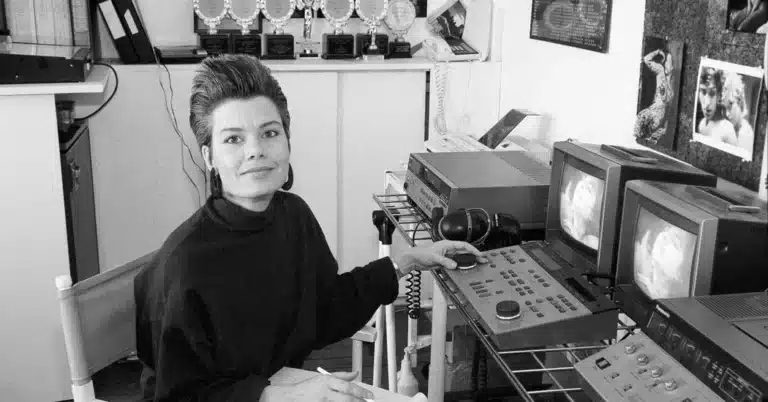
Radical feminism comes down to one slogan: “the personal is political.” The text bearing that title began in February 1969 as an internal memo by American activist Carol Hanisch, before being published in 1970 in the anthology Notes from the Second Year. That same year, Kate Millett’s Columbia thesis, Sexual Politics, called for an end to patriarchy. The couple, the family, the bed: everything becomes political ground. Including how the electricity bills are split, and who remembers to pay them.
Materialist feminism, for its part, was largely born in France. In 1970, Christine Delphy published L’ennemi principal (The Main Enemy) in the journal Partisans: in it, women form a class, exploited through unpaid domestic labor that benefits men. In 1975, she wrote Pour un féminisme matérialiste (for a materialist feminism), and the journal Questions féministes ran from 1977 to 1980 under the direction of Simone de Beauvoir. The nuance with Marxist feminism? For Marxists, capitalism remains the primary enemy; for Christine Delphy, patriarchy has its own economy, which would not disappear with the end of capitalism.
Key takeaway
Radical, materialist and Marxist feminists agree on a system of oppression, not on its name: patriarchy, domestic exploitation or capitalism.
Intersectional, decolonial, ecofeminist, queer: widening the frame
The more recent currents ask an uncomfortable question: which women are we talking about? Intersectional feminism, decolonial feminism, ecofeminism and queer feminism widen the frame to relations of race and class, to nature and to gender identities.
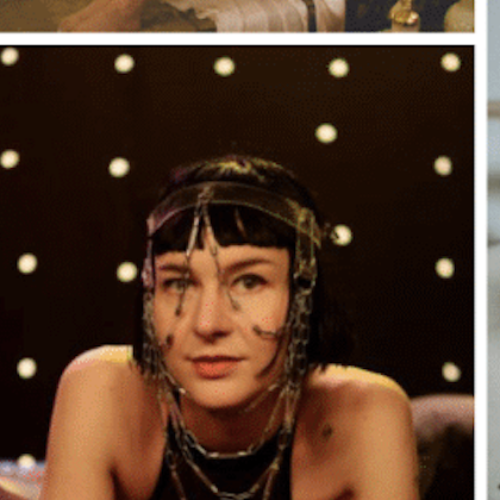
Intersectional feminism owes a great deal to a legal scholar. In 1989, American legal scholar Kimberlé Crenshaw published Demarginalizing the Intersection of Race and Sex, showing that Black women face discrimination that neither antiracist law nor mainstream feminism can see, because they stand at the crossroads of both. The idea had already been put forward in 1977 by the Combahee River Collective, a group of Black socialist lesbians in Boston. On our screens, this demand has faces: performers like Kali Sudhra put at the center bodies and communities that porn used to ignore.
Decolonial feminism pushes the critique further. In Un féminisme décolonial (La Fabrique, 2019), Françoise Vergès takes the point of view of racialized women, starting with those who clean offices and homes, and criticizes a white feminism that speaks without them. Her publisher sums up the climate in one sentence: in public debate, “being decolonial is a disgrace.”
Two other families complete the map. Ecofeminism was born in 1974 with Le Féminisme ou la mort (feminism or death) by Françoise d’Eaubonne, who coined the word and linked the domination of women to the domination of nature. Queer feminism, finally, draws on Judith Butler’s Gender Trouble, published in the United States in 1990. The idea: to think of a feminist politics without a stable identity, and to shake up compulsory heterosexuality by showing that there’s nothing natural about it.
Key takeaway
Intersectional, decolonial, ecofeminist, queer: these currents ask who feminism leaves out, and widen the struggle to race, class, nature and gender.
Porn and sex work: the fault line of the “sex wars”
Sexuality is the subject that divides feminists the most. On one side, abolitionists see pornography and prostitution as violence against women; on the other, pro-sex feminists see them as a field of freedom to be reclaimed. In the United States, this clash became known as the “sex wars.”
Things sped up in 1982. On April 24, the Barnard College conference The Scholar and the Feminist, in New York, was titled Toward a Politics of Sexuality and put desire, pleasure and a radical politics of sex on the program. On the other side, theorists Catharine MacKinnon and Andrea Dworkin drafted an ordinance allowing porn producers to be sued for violating women’s rights. The Minneapolis city council passed it on December 30, 1983, by seven votes to six; six days later, the mayor vetoed it. Indianapolis adopted it in 1984, before a federal appeals court ruled it contrary to freedom of expression in 1985. Among its opponents in court: the Feminist Anti-Censorship Taskforce.
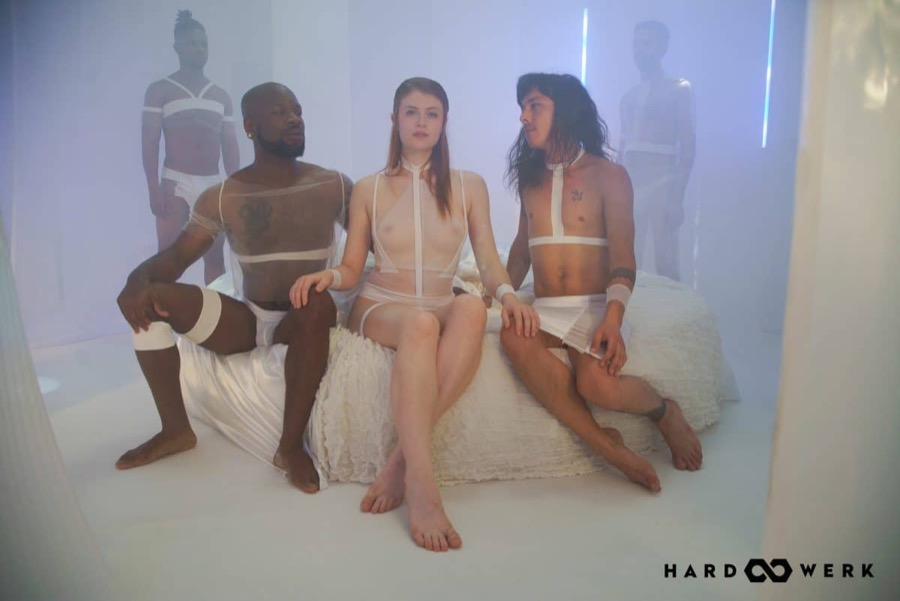
It was in this fight that essayist Ellen Willis popularized the expression “pro-sex feminism,” through an article titled Lust Horizons. Feminist porn is its direct heir: pioneers like Candida Royalle picked up the camera to film women’s desire, and artists like Madison Young make kink a feminist terrain. In 2006, Chanelle Gallant created the Feminist Porn Awards in Toronto, with the store Good For Her. But careful: feminist porn doesn’t claim that all porn is liberating. It asks who’s filming, who’s getting paid and who’s consenting.
In the United States, the abolitionist line has won over one state. Under a Maine law signed on June 26, 2023, selling sex is no longer a crime there, but buying it still is. Everywhere else in the country, the exchange of sex for money remains illegal for sellers and buyers alike, except in Nevada, where some rural counties allow licensed brothels. In the United Kingdom, Northern Ireland has punished paying for sex since June 1, 2015, while in England and Wales buying and selling sex are not crimes in themselves, unlike soliciting in the street or keeping a brothel. Activists like Maria Riot, on the contrary, defend the rights of sex workers: the same debate, forty years later.
Key takeaway
On porn and sex work, pro-sex and abolitionist feminists have been at odds since the 1980s. Feminist porn comes from the pro-sex camp.
FAQ about the types of feminism
Who are the leading figures of feminism in the United States?
Elizabeth Cady Stanton, co-author of the Declaration of Sentiments signed at Seneca Falls (1848), Susan B. Anthony, arrested for voting in the 1872 presidential election, Sojourner Truth and her 1851 speech in Akron, Betty Friedan, author of The Feminine Mystique (1963) and first president of NOW, Gloria Steinem, co-founder of Ms. magazine (1971), bell hooks, author of Ain’t I a Woman: Black Women and Feminism (1981), and Kimberlé Crenshaw, who coined the word “intersectionality” in 1989, are among the most often cited.
Can a man be a feminist?
Yes. UN Women puts it plainly: “Anyone can be a feminist.” A feminist is someone who holds and acts on the belief that all women and girls should have equal rights and the same opportunities as men.
Can you be a feminist and watch porn?
Yes, that’s actually the position of pro-sex feminism, which defends women’s pleasure on screen as elsewhere. Abolitionist feminists disagree. Feminist porn offers a path: watching films shot with consent, with performers who get paid and women’s gaze behind the camera.
Why do people often talk about four types of feminism?
Because currents and waves often get mixed up: we generally count four waves of mobilization, from civil rights to #MeToo. The currents, however, are far more numerous, and no official list pins them down.